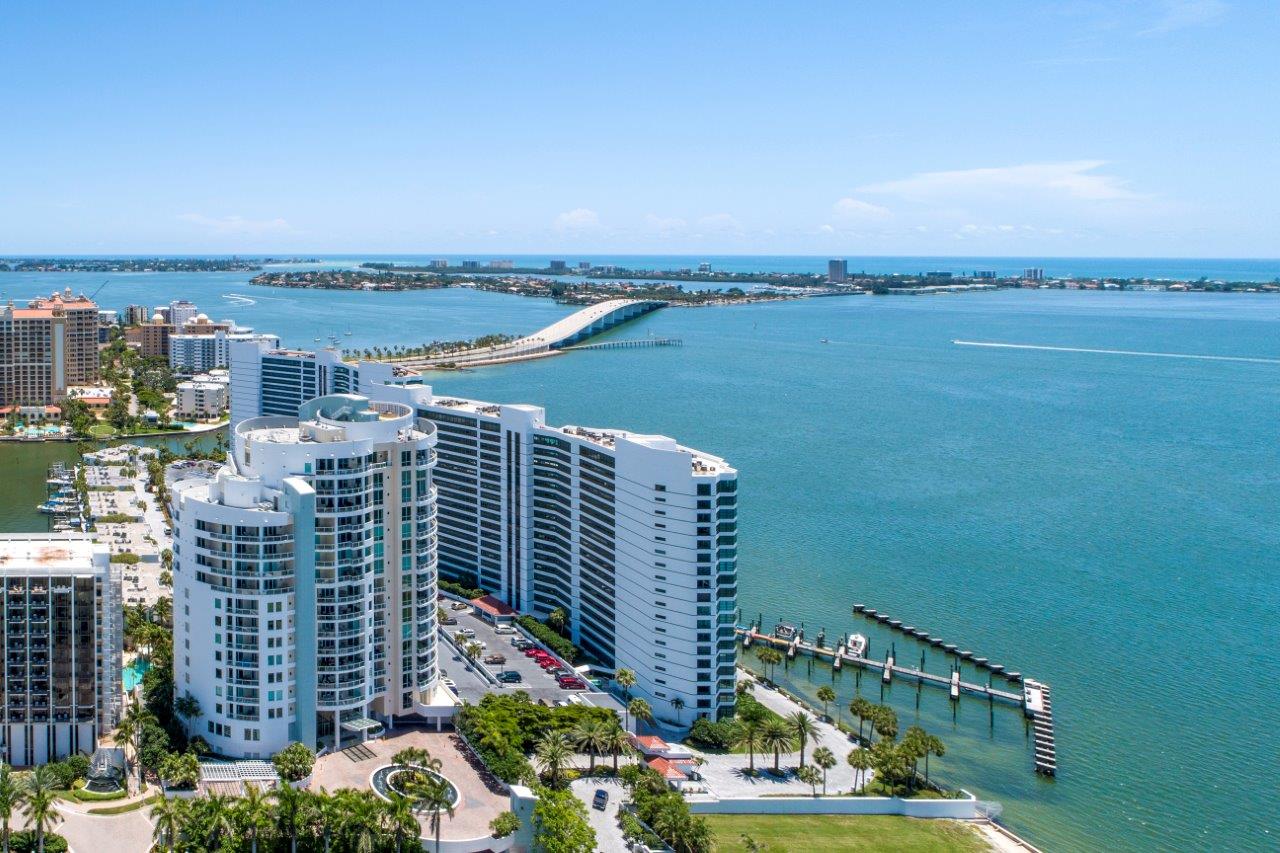
View of the Beau Ciel Tower Residences along the Sarasota Bayfront
Globally, after a year of tepid growth in 2016, sales of international luxury homes bounced back in 2017, posting the best annual growth rate in three years at 11 percent. Rising consumer confidence, low interest rates, a robust stock market and a stable global economy drove demand for luxury property last year, which continued into 2018 despite localized pockets of uncertainty that gave some buyers pause. Sales volumes of second-home and resort lifestyle destinations grew by 19 percent, up from a seven percent annual decline in the prior year. Tech hubs posted gains—as did hidden luxury enclaves and reinvigorated cities.“Price was the name of the game in 2017,” says Michael Saunders of Michael Saunders & Company. “The median sales price declined nearly three percent in the upper-end, and original list-to-sell price ratios were as high as 85 percent. Once prices were adjusted, list-to-sell price ratios shrunk to 98 percent—a significant swing.” (Pg. 10)
Looking ahead to the remaining two quarters of 2018, economists are closely watching the ramifications of tax reform signed into law by the Trump administration in late 2017. Mentioned in the CIRE white paper, and as reported by the Wall Street Journal and Bloomberg, the legislation limits deductions for state and local income taxes as well as mortgage interest, effectively encouraging high net worth individuals to shift their primary residence, and in some cases businesses, to states such as Florida, Nevada and Texas known as low-tax states. To download and read the Luxury Defined study, visit christiesrealestate.com/luxury-defined.“There are a number of tailwinds for the luxury residential real estate markets, including buoyant equity markets and a relatively stable global economy," commented Dan Conn, CEO of CIRE. Factors that dampen investor enthusiasm in other asset classes, such as equity market volatility – the first quarter VIX volatility index recorded its highest quarterly average since 2007 – support a flight to the safety of real assets. Political uncertainty has also led investors to diversify into this less volatile asset class.